

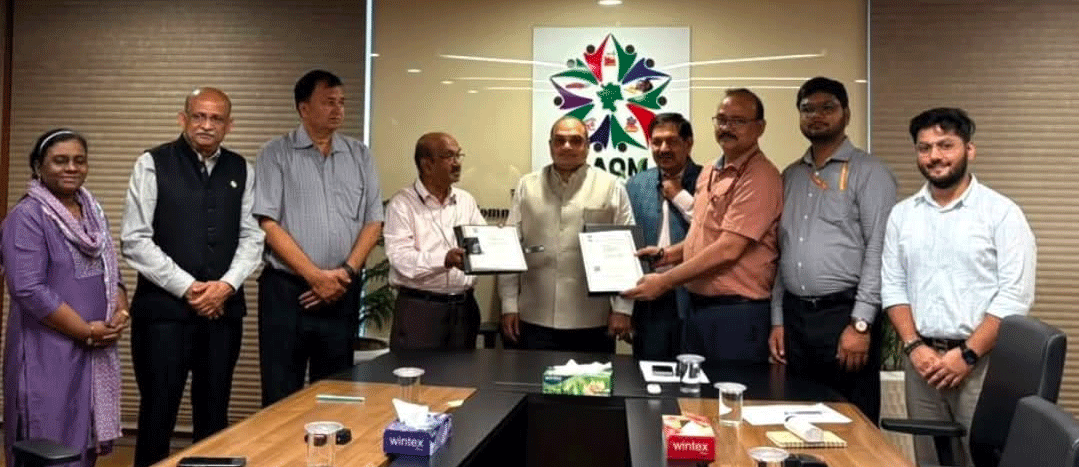
New Delhi: In a major initiative aimed at curbing environmental pollution across the National Capital Region, the Commission for Air Quality Management in NCR and Adjoining Areas (CAQM) signed a Memorandum of Understanding with the Construction Industry Development Council (CIDC). The strategic partnership focuses on mitigating airborne dust originating from construction and demolition (C&D) operations through sustained industry participation, modern technology adoption, and active stakeholder engagement.
The signing ceremony was graced by CAQM Chairman Shri Rajesh Verma, who highlighted the imperative need to integrate clean practices and technological innovations into active construction sites to protect public health. Veteran administrator Shri Surendra Nath Tripathi was also present on the occasion, alongside key representatives from both organizations and leaders from the infrastructure sector.
Construction and demolition dust remains one of the primary contributors to elevated particulate matter levels, particularly PM10 and PM2.5, across Delhi and surrounding regional urban hubs. Under the terms of the newly established agreement, CAQM and CIDC will jointly execute broad-ranging stakeholder outreach drives and specialized awareness programs aimed at builders, contractors, project managers, and local supervisory bodies.
A central pillar of the initiative is the promotion and deployment of advanced construction technologies that naturally suppress or minimize airborne dust generation. This includes encouraging the use of modern machinery, pre-fabricated construction techniques, efficient material handling frameworks, and automated dust-suppression systems such as anti-smog cannons and high-pressure water misters.
In addition to technical intervention, the alliance aims to streamline field-level compliance by providing targeted training sessions and building institutional capacity among site engineers and municipal personnel. By establishing structured communication channels between regulatory bodies and real estate developers, the collaboration seeks to foster voluntary compliance and establish benchmark environmental standards across all major infrastructure and housing projects in the region.