

Bhubaneswar: In order to transform urban mobility and enhance public transit efficiency, the Government of Odisha, through Comprehensive Region Urban Transport(CRUT), is introducing a pilot Bus Priority Lane initiative along two major transit corridors in Bhubaneswar.
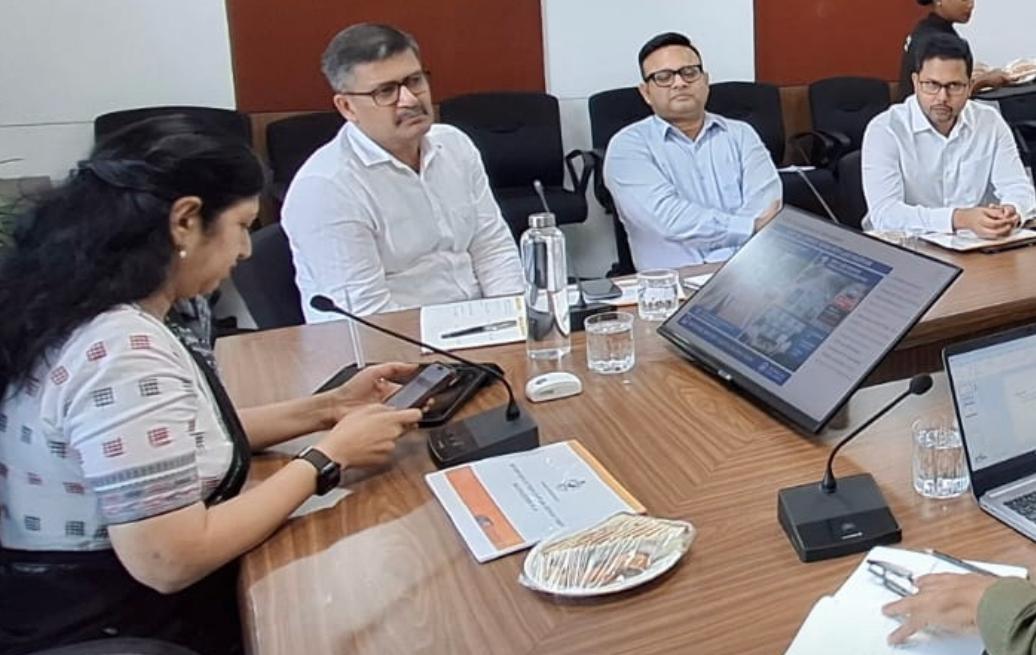
The strategic decision was finalized during a high-level coordination meeting chaired by Housing and Urban Development Department Additional Chief Secretary Shrimati Usha Padhee.
Secretary Public Enterprise and MD CRUT Md.Sadique Alam, Transport Commissioner Shri Amitabh Thakur, BMC Commissioner Shri Chanchal Rana and senior officers from the Transport Department, Bhubaneswar Municipal Corporation, Traffic Police, Bhubaneswar Development Authority, and the Works Department joined the meeting.
Traffic congestion currently causes severe disruptions to the city’s bus network, leading to an estimated loss of 1,200 to 1,500 bus trips every month. This accounts for nearly a 16 percent trip cancellation rate due to traffic gridlock, alongside significant unpredictability in travel times. By reallocating kerb-side road space for public transit, school buses, and essential services, the initiative aims to reduce bus travel times by 10 to 20 percent and increase average travel speeds by 15 to 25 percent, while boosting reliability and road safety.
The pilot program will focus on two high-density stretches selected for their critical role in daily urban movement:
- The 18-kilometer Biju Patnaik International Airport to Nandankanan corridor, which connects key administrative, educational, healthcare, and commercial centers. It features 34 bus stops and serves between 9,000 and 10,000 daily commuters across major routes.
- The 5-kilometer Vani Vihar to Sishu Bhawan corridor, traversing major commercial hubs and transit points such as Master Canteen, Rajmahal, Ram Mandir, and the main railway station area. It covers 15 bus stops and serves 5,000 to 6,500 daily riders.
To minimize disruption to general traffic flow, the project will adopt a flexible kerb-side design rather than rigid physical barriers. The rollout will begin with a 10 to 12 week preparatory phase dedicated to detailed traffic surveys, signal optimization, refreshed lane markings, bus shelter upgrades, and designated staging areas for three-wheelers and ride-hailing services. This will be followed by a 3 to 6 month operational pilot phase to gather real-time performance data.
A dedicated multi-agency committee will establish detailed standard operating procedures governing lane rules, entry-exit points, and incident response. Enforcement will rely on a combination of ground traffic police and modern technology, including 24/7 Intelligent Transportation Management Systems, Automatic Number Plate Recognition cameras, and in-bus surveillance feeds. Unauthorized private vehicles using the priority lane or parking illegally along the kerb will receive auto-generated e-challans, whereas emergency services such as ambulances and fire tenders will hold unrestricted access.
Prior to launch, public communication campaigns will inform residents, local businesses, and commuters about the new road layouts and enforcement rules. Concurrently, bus drivers and operational crews will undergo targeted training covering lane discipline, pedestrian safety, and passenger boarding protocols.
To ensure long-term viability, the priority corridors will be aligned with a broader hub-and-spoke public transport network. Feeding local transit routes directly into these primary corridors will improve first- and last-mile connectivity, lowering reliance on personal motor vehicles for short trips. Data gathered during the pilot phase will be thoroughly evaluated to refine the framework before expanding the priority lane system to other major traffic arteries across the city.