

Bhubaneswar: Odisha faces a recurrent challenge from severe flood situations caused by heavy monsoon rainfall, depressions over the Bay of Bengal, and the overflow of major river systems including the Mahanadi, Brahmani, Baitarani, Subarnarekha, and Budhabalanga.
The state geography makes its coastal plains and river deltas particularly vulnerable to sudden inundation, waterlogging, and agricultural losses. Northern and coastal districts such as Jajpur, Bhadrak, Baleshwar, Kendujhar, Kendrapara, and Cuttack frequently experience the brunt of these natural calamities due to their proximity to major river basins and low-lying topography.
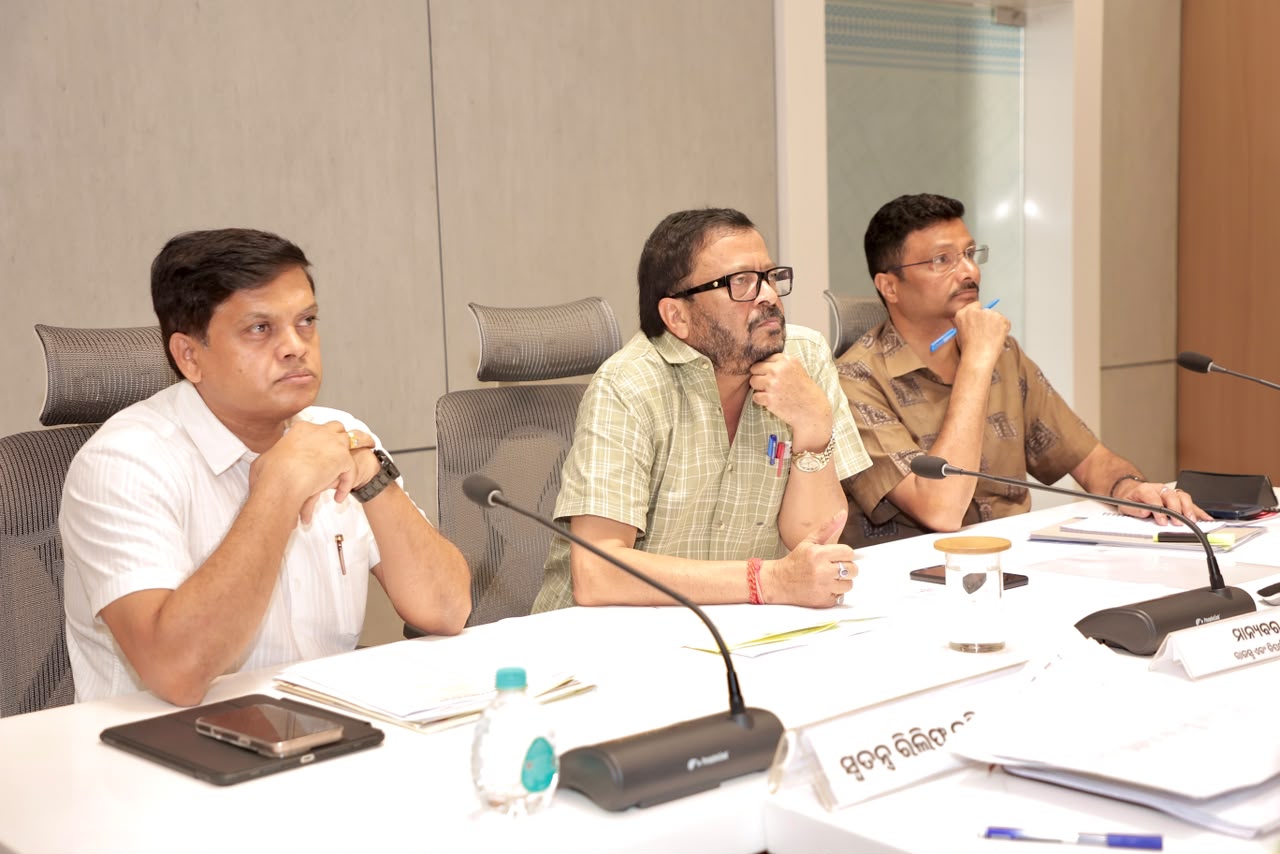
Revenue and Disaster Management Minister Shri Suresh Pujari, alongside Additional Chief Secretary Dr. Arabinda Kumar Padhee and Special Relief Commissioner Shri Rajesh Prabhakar Patil, recently conducted an extensive aerial survey to inspect severely inundated and waterlogged areas across Jajpur, Bhadrak, Baleshwar, and Kendujhar districts. This aerial inspection followed a comprehensive high-level review meeting chaired at Lok Seva Bhawan with collectors of all thirty districts and designated senior monitoring officers.
The state administration is actively coordinating inter-departmental efforts to evaluate rainfall trends, monitor river discharge levels, and execute localized relief and rescue operations. While field teams focus on draining urban and agricultural waterlogging, high-level oversight ensures that emergency aid, medical support, and food provisions reach marooned populations in real time.
During flood events, the state government activates a multi-tiered response mechanism coordinated by the Revenue and Disaster Management Department along with the Special Relief Commissioner. High-level review meetings are convened with district collectors and departmental heads to monitor rainfall patterns, reservoir water levels, and emergency preparedness. Specialized response teams, including the Odisha Disaster Rapid Action Force, National Disaster Response Force, and Fire Services personnel, are deployed to vulnerable blocks to assist with evacuations, search and rescue operations, and the distribution of relief materials.
Aerial surveys and ground assessments by key ministers and senior officials are conducted to evaluate the ground reality, inspect breached embankments, and review shelter management. Focus is directed toward establishing free kitchens, supplying safe drinking water, distributing dry rations, and ensuring continuous healthcare support to prevent waterborne diseases in inundated areas. Through continuous monitoring, real-time data tracking, and coordinated administrative action, the state strives to minimize damage to life, infrastructure, and livelihoods during severe flood spells.