

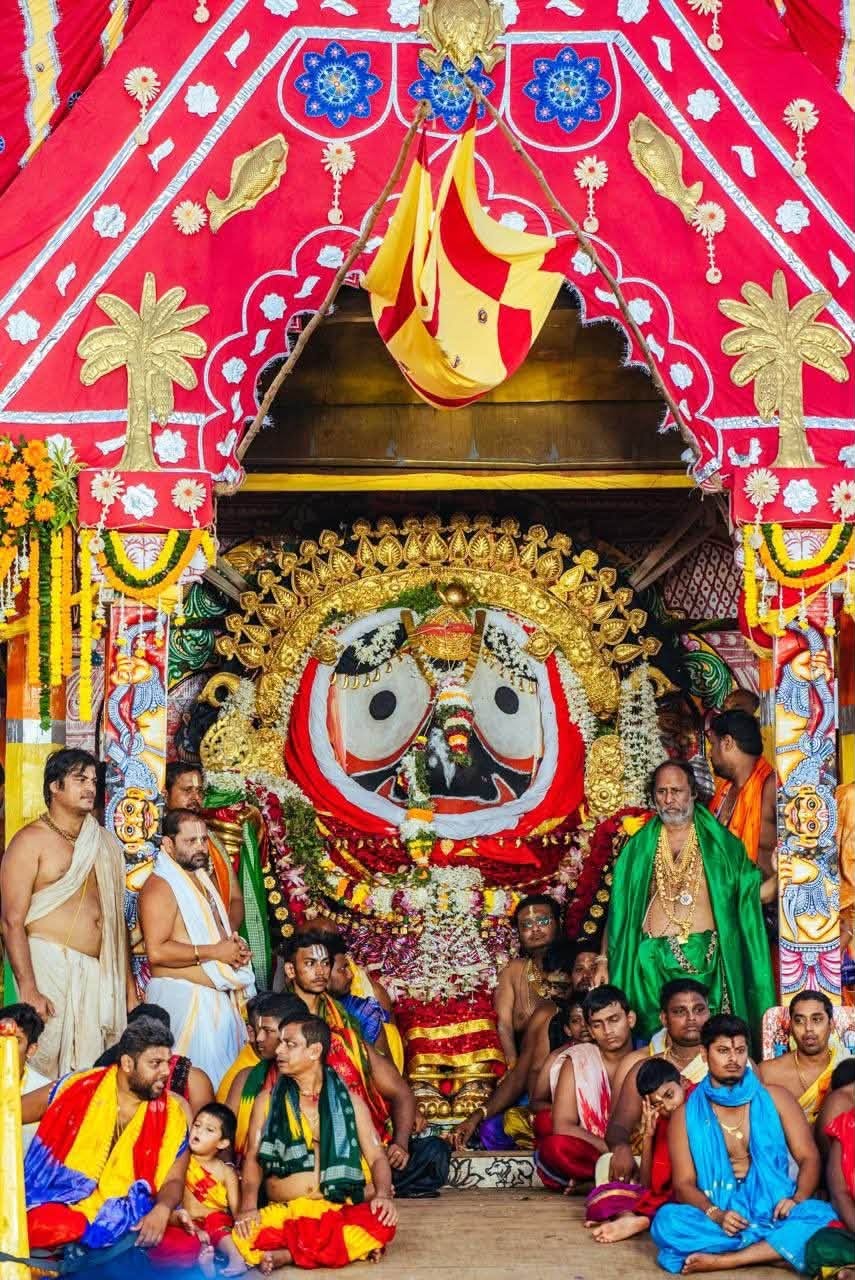
Puri: The grand Suna Besha (Golden Attire) ritual is taking place as part of the annual Rath Jatra festivities. Following the return journey during Bahuda Jatra, Lord Jagannatha, Lord Balabhadra, Devi Subhadra, and Sudarshan are seated on their respective chariots—Nandighosha, Taladhwaja, and Darpadalana—stationed right outside the Shree Jagannatha Temple at the Singhadwara (Lion’s Gate).
Lord Jagannatha is decorated with a golden disc (Chakra) in his right hand and a silver conch shell in his left. Lord Balabhadra is given a golden plow in his left hand and a heavy golden mace in his right.
Devi Subhadra is adorned in detailed gold crowns, tiaras, and necklaces. The deities are fitted with golden hands (Sri Hasta), golden feet (Sri Payara), peacock feathers (Mayur Chandrika), large circular earrings (Makaraw Kundal), and long garlands shaped like lotus and jasmine buds.
Lakhs of devotees have gathered along Bada Danda (the Grand Road) to witness the deities decorated in brilliant gold ornaments. Servitors meticulously adorn the deities with massive golden crowns, hands, feet, weapons, and heavy necklaces, turning the three wooden chariots into a radiant sight under the evening sky. Chants of “Jai Jagannatha” echo across the crowd, as viewing the deities in Suna Besha outside the temple walls on Bahuda Ekadashi is considered exceptionally holy.
The origin of this grand event dates back to 1460 AD when King Kapilendra Deva returned victorious from southern campaigns carrying 16 cartloads of gold and diamonds. Rather than keeping the treasure, he dedicated it to Lord Jagannatha, directing temple priests to craft magnificent gold ornaments specifically to deck the deities on their chariots.
The preparation for this evening ritual begins when storekeeper priests (Bhandara Mekap) retrieve over 200 kilograms of solid gold jewelry from the temple’s inner vault under armed security. Daitapati and Puspalaka priests then work for hours on top of the three chariots to carefully outfit the deities in intricate pieces designed specifically for their wooden forms.
The golden attire will remain on the chariots until around midnight before the servitors carefully dismantle and safely return the ornaments back to the temple treasury.
This sets up tomorrow’s traditional ritual, Adhara Pana, where large clay pots filled with a sweet, spiced drink are offered at the lips of the deities and purposefully broken on the chariots to appease guardian spirits before the deities return to the sanctum sanctorum during Niladri Bije.