

Puri: In anticipation of the magnificent annual congregation of faith, the world-renowned Jagannath Rath Jatra in Puri, the Odisha Government in Department of Works has intensified its efforts to welcome millions of eager pilgrims and global travelers with top-tier transit amenities.
Recognizing that a smooth physical journey enhances the spiritual fulfillment of the visiting devotees, the Chief Minister Shri Mohan Charan Majhi and the Minister of Works, Shri Prithiviraj Harichandan have placed immense structural emphasis on augmenting road assets and ensuring frictionless access to the holy town.
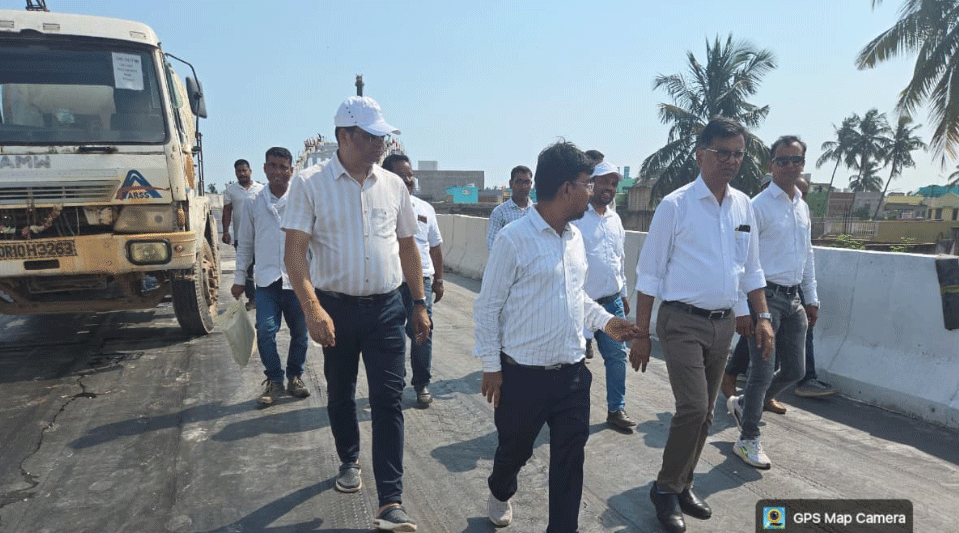
Aligning with this welfare-oriented vision, Principal Secretary, Works, Shri Sanjay Kumar Singh, personally inspected the critical Matiapada Road Over Bridge construction site on National Highway 316 to accelerate its completion phase.
The inspection concentrated heavily on the progress of the sophisticated Bow String Girder engineering works, evaluating the exact micro-milestones left to unlock full operations.
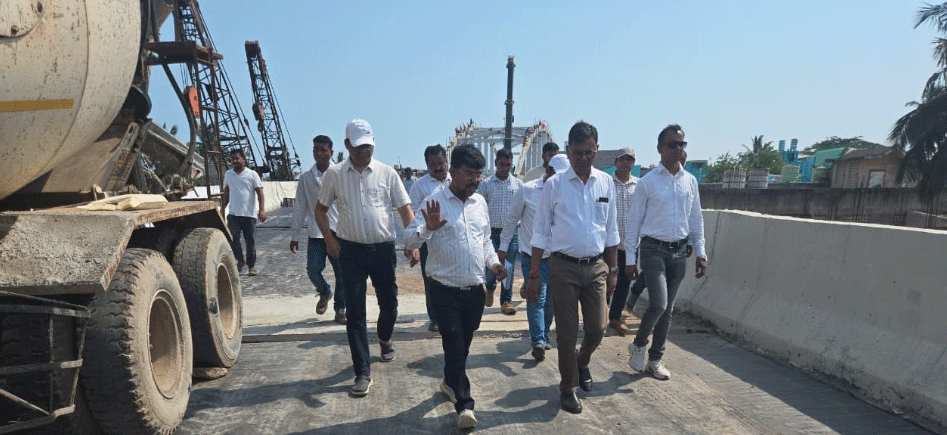
Demonstrating a proactive approach toward public convenience, Principal Secretary Shri Singh issued strict instructions to the National Highways Wing and the assigned project execution team to eliminate any procedural delays. He ordered that the structural launching of the remaining two massive Bow String Girder spans must begin immediately following the specialized review by the Research Designs and Standards Organisation on June 26, 2026. This precise synchronization ensures that advanced engineering compliance seamlessly moves into immediate field action.
To guarantee that citizens do not face incomplete transit paths, the Principal Secretary directed that all dependent infrastructural components be addressed simultaneously rather than sequentially. The construction agencies have been instructed to execute the casting of protective crash barriers, the laying of durable bituminous and concrete surface pavements across both approaching lanes, and the placement of critical expansion joints in a tightly coordinated, time-bound framework. This holistic administrative drive aims to transform the local roadway from a construction zone into a safe, high-capacity arterial route ready for the festive rush.
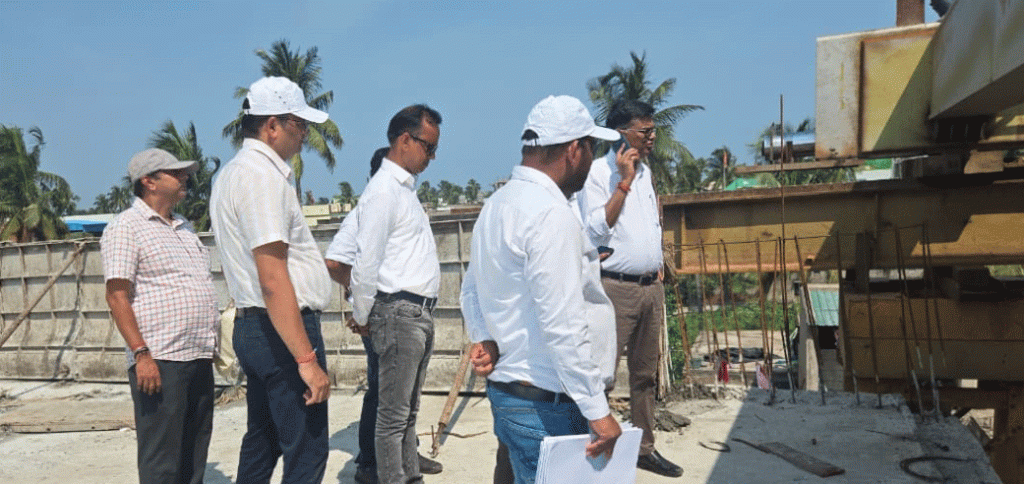
Acknowledging that local commuter flow and pedestrian movement are just as vital as main highway transit, special focus was given to the immediate surroundings of the bridge. The Principal Secretary explicitly mandated that the auxiliary service roads running along both flanks of the main structure must be thoroughly developed, smoothed, and declared traffic-worthy well before the grand chariot procession begins. This calculated intervention will shield daily road users and arriving devotees from traffic bottlenecks, offering a safe and orderly path around the main transit corridors.
The high-level site assessment was supported by the presence of the Chief Engineer of National Highways, the Superintending Engineer of National Highways, and senior technical managers from the contracting firm. Through this rigorous on-site surveillance and dedicated command structure, the state mechanism underscores its deep commitment to delivering key public infrastructure on time, blending citizen comfort with state-of-the-art engineering to honor the sacred journey of the pilgrims.