

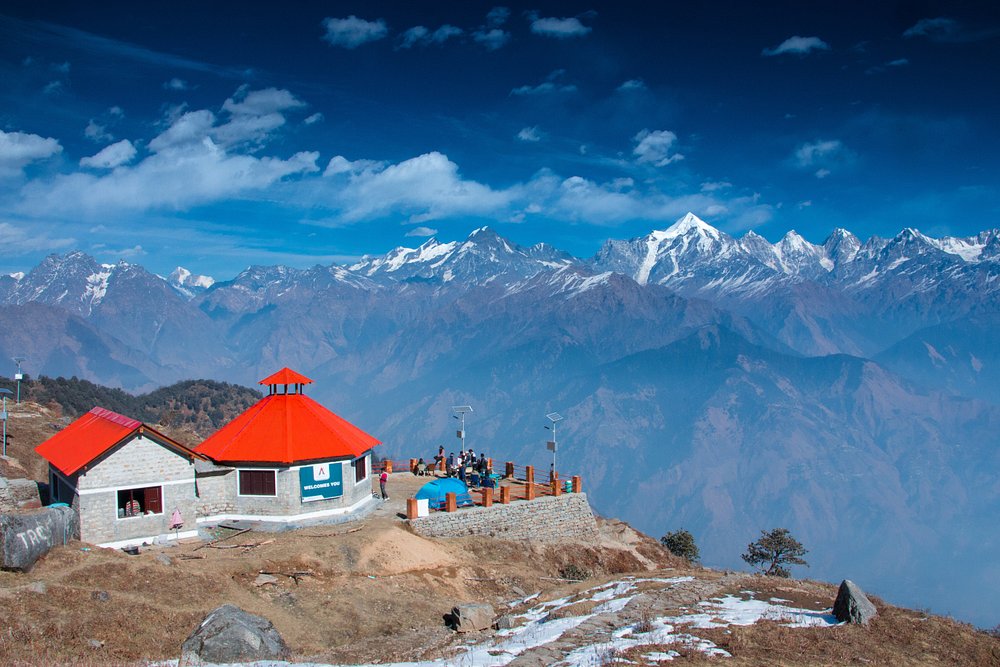
New Delhi: The Himalayas, long revered as pristine and untouched sanctuaries of nature, are facing an unprecedented challenge as human-induced air pollution creeps into their highest altitudes. A year-long scientific investigation conducted between 2022 and 2023 has revealed that even remote regions are no longer immune to the reach of toxic emissions, signaling an urgent need for environmental vigilance in these sensitive ecosystems.
The study was carried out by researchers from the Aryabhatta Research Institute of Observational Sciences, an autonomous institute under the Department of Science and Technology. The team spent twelve months monitoring non-methane hydrocarbons at Munsyari, a prominent high-altitude tourist destination in the Himalayas. Non-methane hydrocarbons are a group of highly reactive gases produced primarily by vehicles, fuel consumption, and industrial processes. Because these gases are instrumental in generating ground-level ozone and secondary aerosols, tracking them is essential for understanding the shifting chemistry of mountain air.
According to the published findings, air quality in Munsyari exhibits distinct seasonal changes. The lowest concentrations of non-methane hydrocarbons were recorded during the winter and monsoon periods, while a sharp and significant rise was observed during the spring and autumn seasons. The research pinned the blame on a combination of local and regional factors. The influx of tourism, widespread use of fuels like liquefied petroleum gas and diesel, increasing vehicular emissions, and localized construction projects have emerged as the primary drivers spoiling the local atmosphere.
Of particular concern to environmental scientists is the presence of specific aromatic hydrocarbons, including benzene and xylene. Once released, these compounds react in the troposphere to form secondary pollutants like ozone. While ozone in the upper atmosphere shields the planet from radiation, ground-level ozone acts as a greenhouse gas that disrupts climate patterns and damages vegetation.
When compared regionally, the atmospheric data revealed a troubling trend. The levels of these reactive gases at Munsyari have surpassed those documented at Nainital, another high-altitude Himalayan site. Although the concentrations still sit below the heavily polluted baselines of nearby urban giants like Haldwani and Delhi, the upward trajectory indicates that urban footprints are expanding rapidly into ecological havens.
The environmental and public health implications of the study are profound. While immediate health threats to residents and visitors remain relatively low, the long-term projections tell a different story. The researchers warned that prolonged exposure to benzene in the region now presents a cumulative cancer risk that breaches standard international safety thresholds.
This discovery shatters the illusion of the isolated, self-clearing mountain wilderness. The contamination of Munsyari serves as a stark warning that atmospheric transport and expanding human activities are systematically degrading the Himalayan climate. Experts involved in the study emphasize that without continuous environmental monitoring and targeted, localized emission-control strategies, the ecological integrity and health security of these fragile mountain systems will continue to erode.