

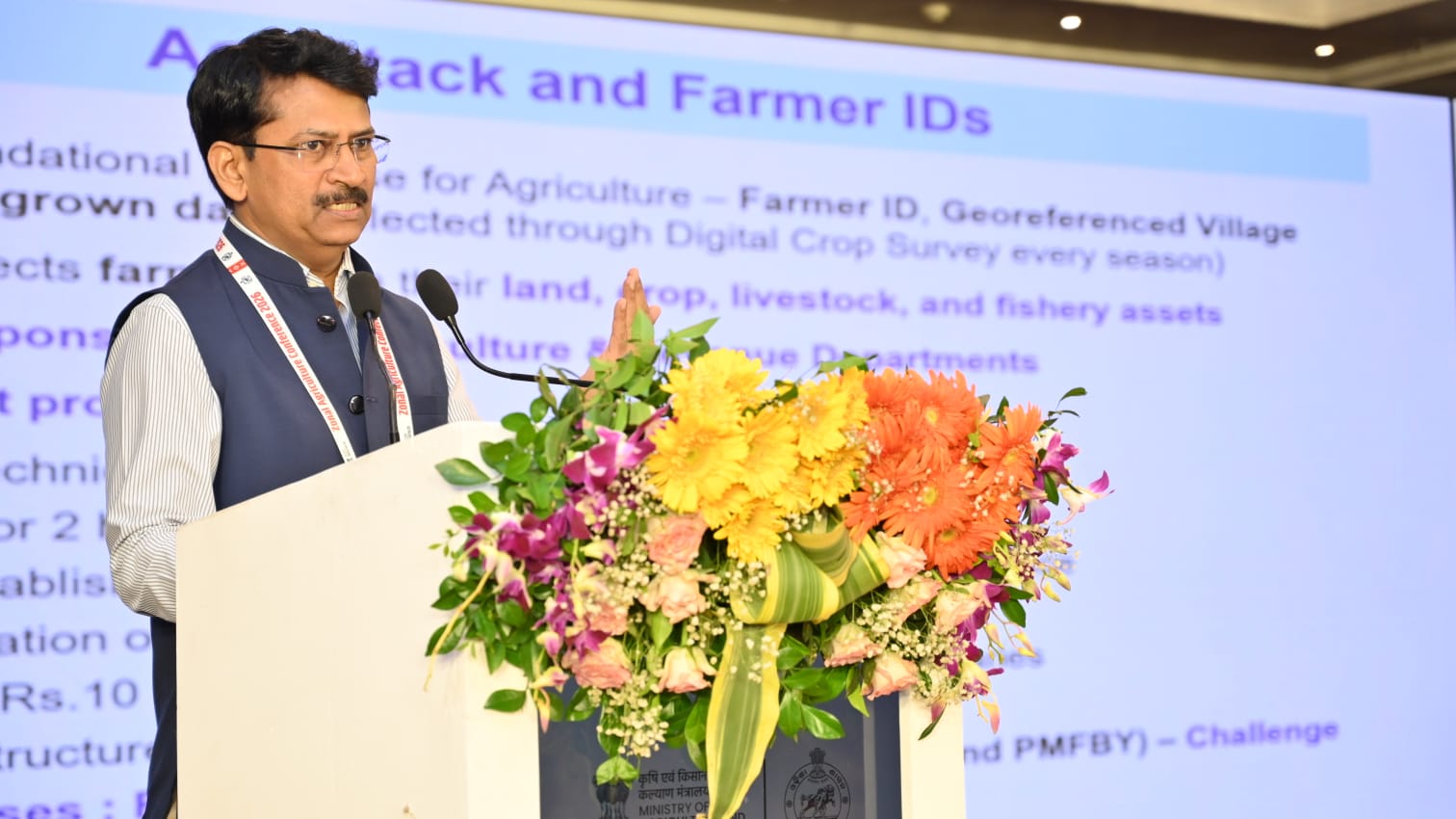
Bhubaneswar: Dr. Pramod Kumar Mehrda, Additional Secretary in the Union Ministry of Agriculture and Farmers Welfare, outlined the roadmap for technological transformation in the agricultural sector at the Eastern Regional Agriculture Conference held on 19 May here.
Addressing representatives from eastern states, Dr. Mehrda emphasized the expansion and integration of the government’s flagship initiatives, AgriStack and BharatVistaar, to create an interconnected and digitally responsive ecosystem for farmers.
Highlighting the recent progress of BharatVistaar, an artificial intelligence-powered unified advisory system, Dr. Mehrda shared that its first phase launched on February 17, 2026. The digital platform delivers critical services, including Indian Meteorological Department weather updates, Agmarknet market prices, crop packages from the Indian Council of Agricultural Research, and benefit tracking for major central programs like PM-KISAN and PMFBY. As of May 14, 2026, the platform had processed over 44 lakh questions from farmers, maintaining a positive feedback rate of 83 percent.
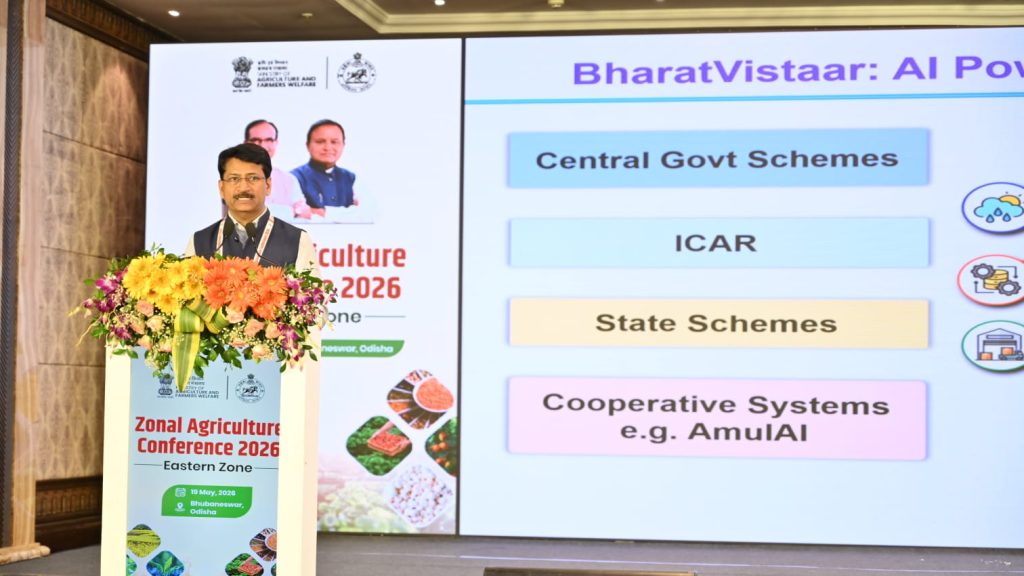
A central focus of Dr. Mehrda’s presentation was the integration of state-level schemes into the centralized digital platform. He referred to an official communication dispatched from his office on April 27, 2026, which formally requested state governments to nominate State Nodal Officers to expedite this integration process.
The expansion strategy includes making services available across all major regional languages, with state departments tasked to vet the accuracy of local linguistic content. Future iterations of BharatVistaar aim to incorporate Krishi-DSS and hyper-local Mausam Gram weather predictions to enable highly personalized, data-driven agricultural advisories.
Dr. Mehrda also reviewed the implementation of AgriStack, a foundational digital infrastructure compiling unique Farmer IDs, georeferenced maps, and digital crop surveys across the eastern zone. While 19 states across India have successfully registered 9.65 crore Farmer IDs, progress remains uneven among eastern states.
Chhattisgarh leads the region with a high registry achievement of over 75 percent, while Bihar stands at a moderate 55.4 percent achievement rate. And both Jharkhand and West Bengal are yet to formally commence the registration of digital IDs. Odisha is striving hard to get more coverage in AgriStack.
To address these implementation gaps, Dr. Mehrda urged states to adopt proactive campaign models similar to Bihar’s strategy of using Panchayati Raj institutions, local leadership, and funded registration desks. He noted that a major hurdle in eastern states remains the high volume of unclaimed land parcels and the lack of clear standard operating procedures to verify cultivators such as sharecroppers, tenants, and temple land operators.
The conference highlighted that digital registries will soon become mandatory operational touchpoints. Dr. Mehrda revealed the upcoming launch of the National Fertilizer Sale Framework, an integrated platform connecting AgriStack with the Integrated Fertilizer Management System.
Field testing for biometric-backed fertilizer purchases using Farmer IDs is scheduled to begin tomorrow across selected villages in five states. Full district-wide rollouts are expected within a month, with fiscal incentives linked to state compliance.
Dr. Mehrda concluded by stressing that linking all land parcels to verified digital identities remains a priority for ensuring the targeted delivery of procurement and input subsidies.