

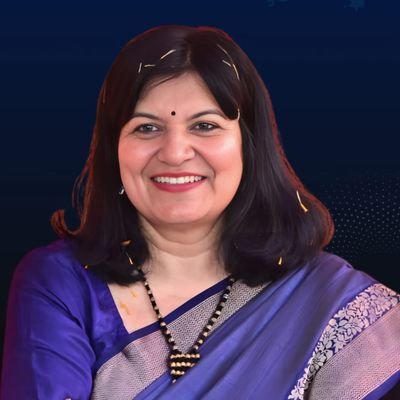
Bhubaneswar: Shrimati Aparajita Sarangi has raised hope for Metro Rails for Odisha Capital City by formally urging Chief Minister Shri Mohan Charan Majhi to reconsider the State Cabinet’s recent decision to halt the project.
In her detailed communication, she emphasizes that Bhubaneswar is witnessing rapid urbanization and is currently at a tipping point where existing public transport can no longer sustain the growing pressure.
The MP, who loves Capital City argues that the Metro is the most viable long-term solution to transform mobility not only in the capital but also in adjoining areas like Cuttack, Jatni, and Khurdha.
Shrimati Sarangi highlights that the project is a necessity for senior citizens, students, and working professionals who require a high-capacity and modern transit system to navigate the expanding urban landscape.
The letter points out that the decision to shelve the project appears to lack a factual analysis of the region’s actual needs. Sarangi notes that the twin cities of Bhubaneswar and Cuttack have effectively merged, and their combined population now justifies the investment in a Metro Rail system.
She reminds the Chief Minister that the government’s own goal of positioning Bhubaneswar as an investor-friendly city and a major tourist hub requires such infrastructure. According to her, the Metro would provide seamless access to landmarks like the Lingaraj Temple, Dhauli, and Nandankanan Zoo, thereby catalyzing economic activity and supporting the broader vision for a developed Odisha.
Firebrand MP Shrimati Sarangi also raises significant concerns regarding the financial implications of delaying the project. She informs the Chief Minister that 274 crore rupees have already been spent from the State exchequer, and abandoning the project now would result in wasteful incidental expenses.
Furthermore, she warns that if the decision to build a Metro is postponed for another decade, the escalation in costs could be two to four times the current estimate. She challenges the idea of using financial feasibility as a reason for rejection, noting that Metro systems across India are implemented for public interest and are subsidized by the government rather than being run for immediate profit.
Finally, Shrimati Sarangi invokes the words of the President of India, Shrimati Droupadi Murmu who recently praised the increasing number of Metro cities as a solution to urban challenges. She questions why Odisha should be deprived of such an initiative when the world is moving toward clean, electric, and sustainable urban living.
By offering her personal assistance in coordinating with Central departments for funding and approvals, she appeals to the state leadership to respect public sentiment and revisit the decision.
She concludes that ignoring the demand for the Metro risks weakening public trust in development promises and misses a critical opportunity to make the region truly future-ready.