

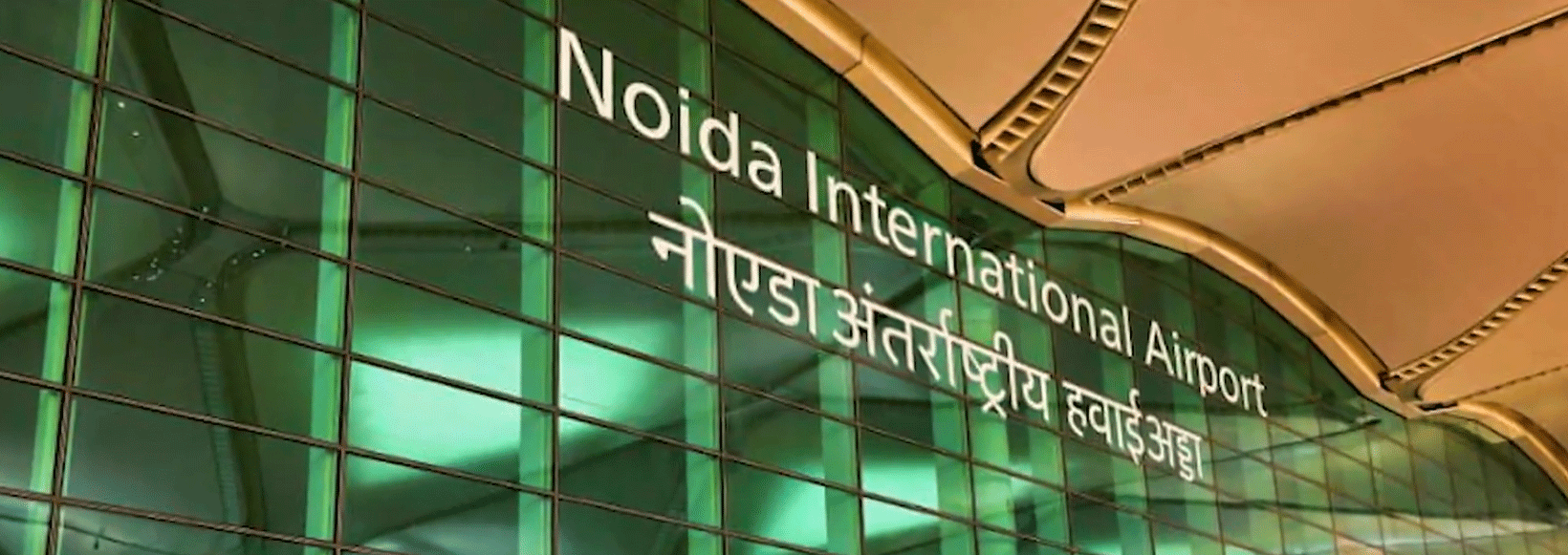
NOIDA: The Noida International Airport, often referred to as the Jewar Airport, has officially transitioned from a massive construction site into a functional aviation landmark. As the project takes wings, it positions itself as a critical gateway for the National Capital Region, designed to alleviate the mounting pressure on Delhi’s Indira Gandhi International Airport.
The inauguration of the Noida International Airport was marked by a high-profile ceremony led by Prime Minister Narendra Modi, signifying a landmark moment for India’s infrastructure. Joining the Prime Minister were Uttar Pradesh Governor Anandiben Patel and Chief Minister Yogi Adityanath, underscoring the collaborative effort between the central and state governments to bring this mega-project to fruition.
During the event, the Prime Minister emphasized that the airport would serve as the logistical gateway for northern India, transforming the state of Uttar Pradesh into a global investment hub. He noted that the project is a testament to the Gati Shakti master plan, which focuses on integrated and multi-modal connectivity to boost economic growth.
Chief Minister Yogi Adityanath highlighted the rapid transformation of the region, noting that the airport has already spurred the development of an Electronic City and a Film City nearby. The presence of the top leadership at the opening reflects the strategic importance of the airport, not just for air travel, but as a catalyst for industrial development across the Delhi-NCR and western Uttar Pradesh corridors.
The leaders also reviewed the digital and sustainable features of the terminal, which sets a new benchmark for greenfield airports in South Asia. With the formal opening complete, the facility is now entering its final phase of operational readiness trials before welcoming its first commercial passengers.
The first phase of the airport features a single runway and a terminal building capable of handling 12 million passengers annually. Spread over 1,334 hectares, the facility is being developed by Zurich Airport International AG in collaboration with the Uttar Pradesh government. While initial operations focus on domestic connectivity, the long-term master plan envisions a multi-runway hub with a capacity to serve up to 70 million passengers per year by the time all phases are complete.
Connectivity is a primary focus for the new terminal. The airport is being integrated into a broader multi-modal transport network, including direct links to the Yamuna Expressway and the upcoming Delhi-Mumbai Expressway. Plans for a dedicated metro line and a high-speed rail station are also in motion to ensure that travelers from Delhi, Noida, and Greater Noida can reach the terminal efficiently.
Sustainability serves as a cornerstone of the design. The project aims to be India’s first net-zero emissions airport, utilizing digital technologies to manage energy consumption and waste. The architectural style incorporates elements of Indian heritage, such as an open courtyard inspired by traditional havelis, while maintaining a modern, streamlined flow for baggage handling and security checkpoints.
The economic impact on the region is already visible. The surrounding area, known as the Yamuna Expressway Industrial Development Authority zone, has seen a surge in investment across the logistics, hospitality, and manufacturing sectors. With the airport now moving toward its commercial launch, it is expected to create thousands of jobs and establish western Uttar Pradesh as a significant player in the global aviation landscape.