

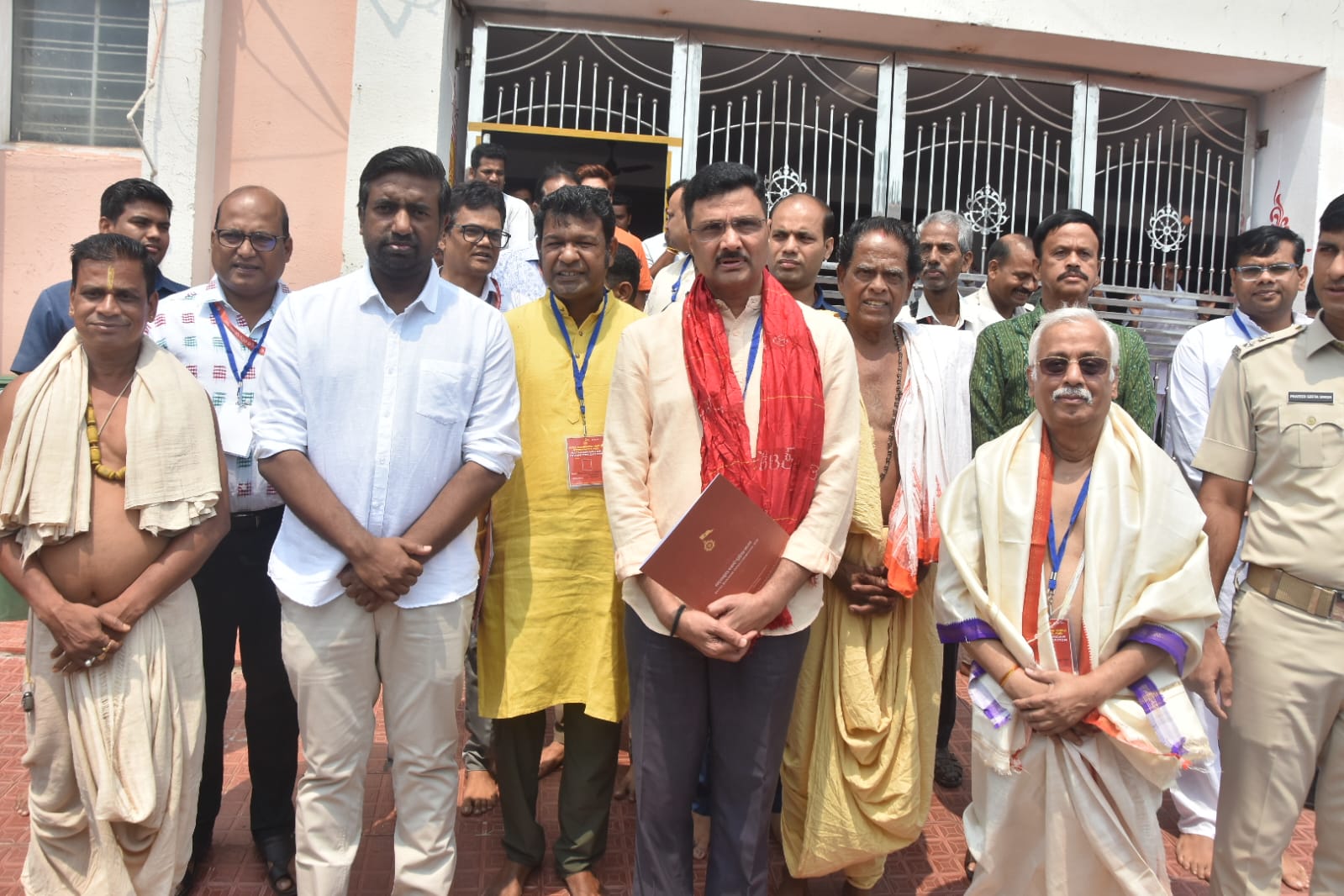
Puri: The air in the holy town of Puri was thick with devotion and a profound sense of anticipation on March 25, 2026. For the millions of devotees who look toward the Shreemandira as the spiritual epicenter of the universe, this day marked a momentous chapter in history. Under the meticulous guidelines of the State Government’s Standard Operating Procedure (SOP) and the decisive mandate of the Temple Management Committee, the doors to the Ratna Bhandara—the divine treasury of Lord Jagannath—were opened at the auspicious moment of 12:09 PM.
This was not merely an administrative exercise; it was a sacred ritual of transparency, preservation, and deep-seated faith. The process began at the temple office conference hall, where authorized members gathered in a spirit of solemnity. Before embarking on this monumental task, each member signed a declaration of confidentiality, acknowledging the gravity of the treasures they were about to encounter—treasures that belong not just to a temple, but to the collective soul of Odisha.
Led by the Chief Administrator of the Shreemandira, Dr. Arabinda Kumar Padhee, and Justice Biswanth Rath, Chairman of the High-Level Committee, the delegation moved toward the 12th-century shrine. The group included senior officials, the Chhatisa Nijoga Nayak, and dedicated Sevayat members of the Ratna Bhandara sub-committee. Their entry into the temple at 11:00 AM was a sight of traditional elegance, as every participant donned ceremonial attire, stripping away the vanities of the modern world to stand humbly before the Lord.
In a beautiful synthesis of ancient tradition and modern security, the members underwent rigorous checks. Dr. Padhee personally ensured that no metallic objects were carried inside, preserving the sanctity of the inner sanctum. Yet, before the locks were turned, the heart of the process remained spiritual. The delegation sought the divine blessings of the Great Mothers—Maa Vimala, Maa Bhubaneswarini, and finally Maa Lakshmi, the custodian of all wealth. Only after receiving their “Agyanmala” or divine consent did the team pass through the metal detectors at the Beherana Dwar to begin the inventory.
Inside the Ratna Bhandara, the atmosphere was one of quiet reverence. Professional goldsmiths, gemologists, and weights-and-measures officials worked alongside the Sevayats. Every ornament, every precious stone that has adorned the Holy Trinity for centuries, was carefully examined. To ensure a permanent record for posterity, the entire process was documented through high-definition photography and videography, culminating in the creation of a sophisticated E-Catalogue. This digital bridge ensures that the legacy of the Lord is preserved with scientific precision while maintaining its mystical essence.
As the day’s work concluded, the doors were sealed once again under the watchful eyes of the Magistrate. The digital footprints of this historic day—the data chips containing the recordings—were safely deposited in the temple’s high-security strongroom.
The successful completion of this phase, free from any hurdles, is a testament to the seamless cooperation between the administration, the servitors, and the unwavering faith of the devotees.
Expressing his heartfelt gratitude, Dr. Arabinda Kumar Padhee lauded the collective spirit of the “Shree Jagannatha Sanskruti,” noting that it is through the Lord’s own grace that such a daunting task was executed with harmony and discipline. Today, the Ratna Bhandara stands not just as a storehouse of gold, but as a symbol of the enduring identity and cultural wealth of every Odia.