

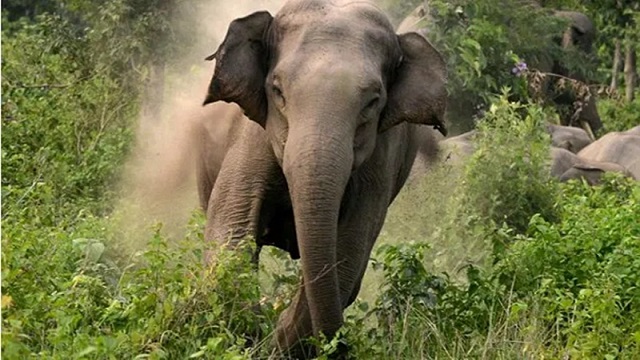
Bhubaneswar: Concerns raised over new data that paints a grim picture of the escalating human-elephant conflict across Odisha. During the 2024-25 fiscal year, the state recorded 171 human fatalities, the highest ever reported in its history and the highest in the country. This sharp rise in casualties has prompted environmentalists to call for an immediate overhaul of current conservation strategies to prevent further loss of life.
This crisis is most acute in the state’s industrial and mining belts, where districts like Dhenkanal, Keonjhar, Angul, and Mayurbhanj have become major flashpoints. Sundargarh and Deogarh are also facing severe pressure as forest cover shrinks and traditional habitats are disrupted.
The crisis is equally devastating for the state’s elephant population. Recent reports presented in the Odisha Legislative Assembly confirmed that 114 elephants died over the last 18 months alone. Of these, electrocution remains the leading cause of unnatural death, accounting for 42 of the fatalities. Experts point to the fragmentation of traditional migratory corridors due to a ten-fold increase in mining, quarrying, and new railway projects, particularly in hotspots like Dhenkanal, Angul, and Keonjhar.
In Dhenkanal, the Rengali canal network has been identified as a major trap, forcing elephants to climb steep inclines and stray into nearby villages in search of food. To combat this, the government has recently expanded the Gaja Sathi volunteer scheme to over 2,100 villages and hiked compensation for human deaths from 10 lakh.
However, the Wildlife Society of Odisha emphasizes that without restoring the 14 identified elephant corridors and securing 24/7 monitoring of herds, the state risks a permanent cycle of violence between its residents and its national heritage animals.