

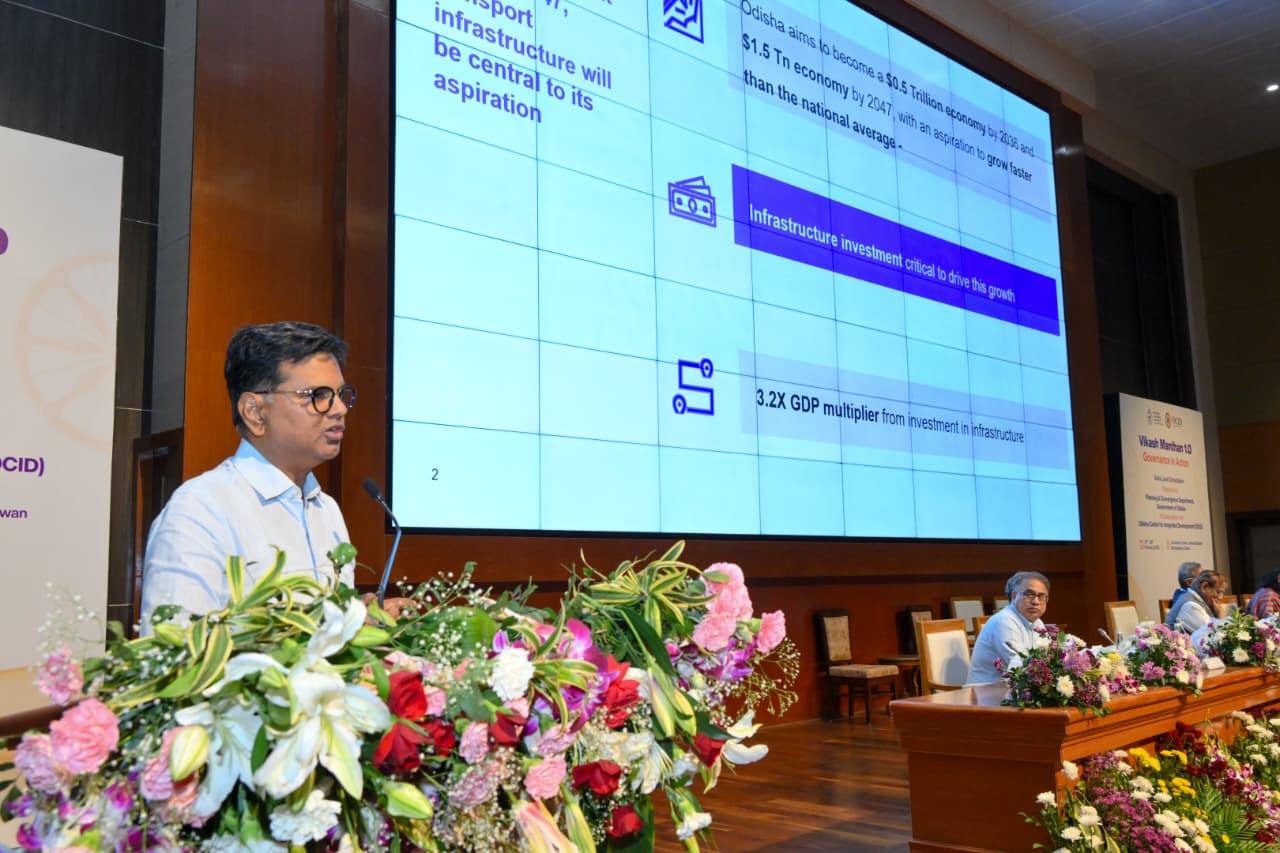
Bhubaneswar: Shri Sanjay Kumar Singh, Principal Secretary, Department of Works, has identified road infrastructure as the essential foundation for a prosperous Odisha. Speaking on the strategic vision for the state, he emphasized that a robust road network is the primary catalyst for progress across multiple sectors, including industrial manufacturing, tourism, rural development, and logistics.
A key highlight of his assessment was the reliance of modern industry on efficient surface transport. Citing empirical data, Shri Singh noted that for freight movements spanning up to 600 kilometers, industries consistently prioritize road connectivity over other modes of transport. This makes the expansion and modernization of highways a non-negotiable requirement for the state’s economic competitiveness.
Despite the state’s progress, the Principal Secretary Works acknowledged that Odisha currently lags behind the national average in terms of road network density. He specifically pointed out the limited presence of six-lane National Highways within the state as a bottleneck for high-speed logistics and large-scale industrial movement.
To address these challenges, the government is adopting a rigorous, data-driven strategy. The objective is to move beyond merely closing existing infrastructure gaps; the state aims to secure a position among the top ten states in India for road density.
This ambition will be realized through the development of new economic corridors and a systematic approach to capacity augmentation. By strengthening the logistics backbone, Odisha intends to create a seamless environment for business and regional trade.
The fourth plenary session of Vikash Manthan 1.0 –consultation” Governance in Action, titled “Samruddha Odisha,” witnessed wide-ranging deliberations by senior officers on accelerating Odisha’s growth momentum through industry expansion, services transformation, urban reforms, logistics strengthening and rural economic revitalisation.
The session reflected a shared optimism about Odisha’s emerging economic trajectory while underscoring the need for focused, time-bound execution.