

Bhubaneswar: As the silver moon rises over the landscape of Odisha today, February 15, 2026, the air is thick with the scent of sandalwood and the resonating echoes of Har Har Mahadev. From the misty hills of Koraput to the rhythmic waves of the Bay of Bengal, the state has transformed into a living altar of devotion for Maha Shivaratri.
In the holy city of Puri, the ancient shrine of Shree Lokanath remains a focal point of deep spiritual yearning. Devotees have gathered in thousands, waiting for the moments when the submerged Lingam reveals itself, a reminder of the divine presence that remains steady beneath the surface of our turbulent lives. Nearby, the Maa Bimala Temple, one of the foremost Shakti Pithas, hums with the energy of the divine Mother, as devotees seek her blessings before approaching the Lord of the Universe.
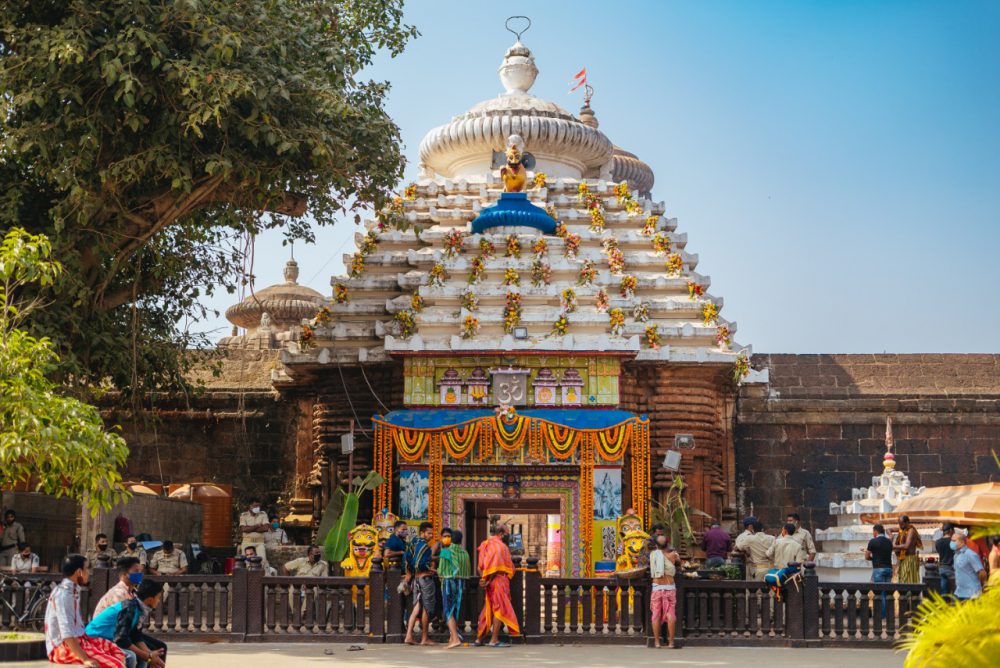
The capital city of Bhubaneswar is bathed in a celestial glow as the historic Lingaraj Temple prepares for the raising of the Mahadeepa. This sacred lamp, ascending to the temple spire, is not just a ritual but a symbol of the light of knowledge piercing through the darkness of ignorance within every human heart. This spiritual journey extends to Jajpur, the Biraja Kshetra, where Maa Biraja—the supreme Shakti—presides over a land where the union of Shiva and Shakti feels almost tangible in the cooling evening breeze.
In the north, at the sacred bank of the Baitarani in Bhadrakh, the devotees at Shree Akhandalamani offer their prayers with tearful eyes and unwavering faith. The devotion is mirrored at Shree Chandaneswar in Balasore, where the sea breeze carries the prayers of those seeking healing and peace. Meanwhile, deep in the limestone caves of Koraput, the natural wonders of Shree Guptaswar remind the faithful that the divine is hidden in every corner of the earth, waiting to be discovered through silence and meditation.
The celebration is incomplete without bowing at the feet of the Mother at other revered Shakti Pithas like Maa Tara Tarini in Ganjam, where the twin goddesses look over their children with compassion, and Maa Samaleswari in Sambalpur, the guardian of the west. From the Mangala Temple in Kakatpur to the Sarala Temple in Jagatsinghpur, every corner of Odisha tonight is a testament to an eternal love story—the marriage of Parvati and Shiva—that continues to inspire millions to find their own inner balance and grace.
As the lamps flicker and the night-long vigil begins, there is a collective sense of surrender. In this sacred darkness, the people of Odisha are not just celebrating a festival; they are rediscovering their souls, united by a faith that transcends the material world and touches the infinite.