

New Delhi: National Capital City is currently experiencing a historic surge in hotel room tariffs, with the hospitality sector witnessing a dramatic supply-demand imbalance this February. As the city prepares to host the India AI Impact Summit 2026 at Bharat Mandapam, luxury properties have seen rates climb to unprecedented levels, driven by the arrival of over 35,000 global delegates, including heads of state and tech billionaires.
The primary cause for the price escalation is the convergence of high-profile international events with a peak wedding season featuring a high number of auspicious dates. This dual pressure has exhausted the city’s premium room inventory, prompting hotels to employ dynamic pricing models. Industry experts note that while average rates for standard rooms have jumped from the usual range of 20,000 to 40,000 rupees to over 1 lakh rupees per night, the most extreme figures are concentrated in the ultra-luxury and presidential suite categories.
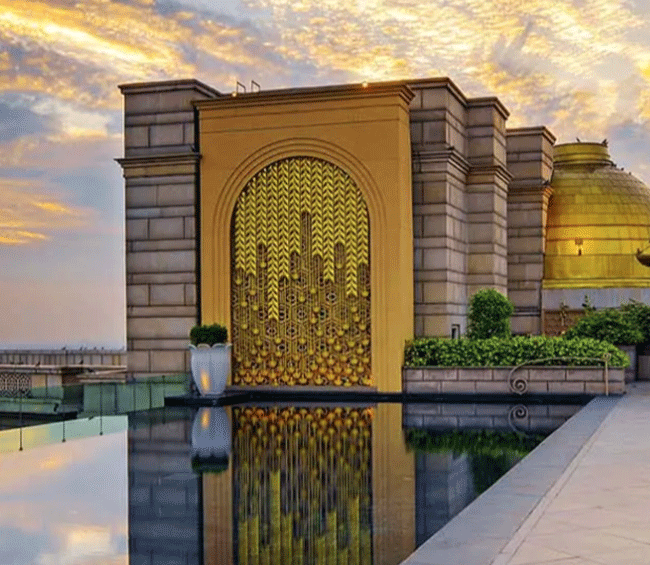
The highest rates currently being quoted have reached stratospheric levels. At The Oberoi, New Delhi, a luxury suite was recently listed at 25 lakh rupees for a single night, while a five-day stay in a premier suite reached a staggering 1.18 crore rupees. Similarly, The Leela Palace has seen its Maharaja Suite quoted at approximately 17 lakh rupees per night during the peak summit dates of February 18 and 19. Other flagship properties, including the ITC Maurya, Taj Palace, and The Imperial, are reporting near-total sell-outs, with remaining club-level rooms and suites priced between 3 lakh and 5 lakh rupees.
The Hotel Association of India has clarified that while these headline-grabbing figures reflect the top tier of luxury accommodation, the weighted average room rates across the city’s five-star segment are generally hovering between 40,000 and 60,000 rupees. Despite this, the scarcity of rooms has become so acute that some travelers have reportedly explored alternative stays in premium hospital suites to find comparable luxury facilities. This period of extreme volatility underscores the massive economic impact of global summits on metropolitan hospitality hubs and is leading to renewed discussions regarding price ceilings and the long-term infrastructure capacity of the national capital.