

Bhubaneswar: Odisha has firmly positioned itself as a critical player in India’s blue revolution, consistently ranking among the top four fish-producing states in the country. Recent reports indicate that the state has experienced a significant surge in production, contributing nearly 12 lakh tonnes to the national basket in the most recent fiscal year. This growth is largely driven by a strategic focus on inland and brackish water aquaculture, where Odisha has leveraged its extensive network of reservoirs and the unique ecosystem of Chilika Lake.
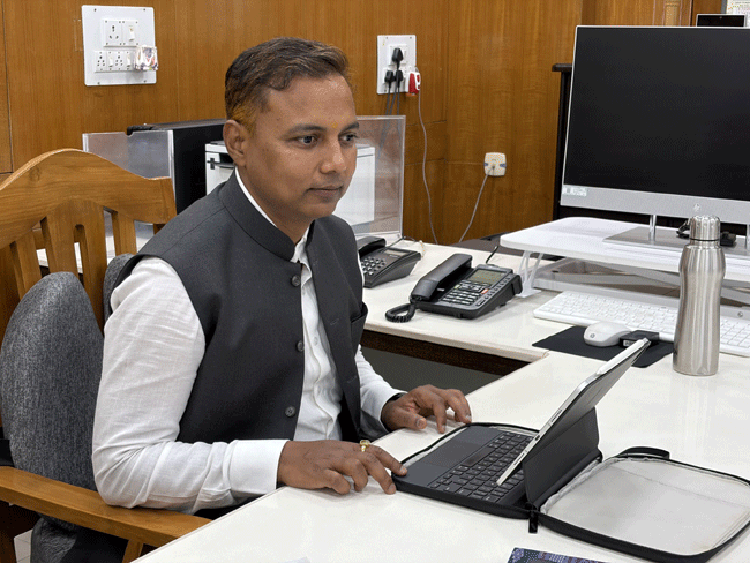
Odisha continues to solidify its reputation as a powerhouse in the Indian fisheries sector, currently ranking as the fourth-largest fish producer in the nation. Under the leadership of Shri Prem Chandra Chaudhary, Secretary of Fisheries and Animal Resources Development (ARD), the state has intensified its efforts to transition from traditional methods to a high-tech, commercialized aquaculture model
The state’s current focus remains on the “Blue Transformation” through several localized initiatives. One of the primary areas of news interest is the massive expansion of the “Matsya Pokhari” scheme, which provides substantial subsidies for the creation of new freshwater ponds. Odisha is also leading the way in technology adoption by promoting Biofloc farming units and Recirculatory Aquaculture Systems (RAS) to maximize yield in smaller geographical footprints. These high-tech interventions are designed to attract the youth and tech-savvy entrepreneurs into the sector, moving away from traditional, labor-intensive methods.
Infrastructure development is another cornerstone of Odisha’s current strategy. News from the state highlights the modernization of fishing harbors like Dhamra and Nuagarh, alongside the establishment of specialized testing labs to ensure that seafood exports—particularly frozen shrimp—meet the stringent quality standards of the US and EU markets. By improving traceability and cold chain logistics at the landing centers, the state is aiming to minimize post-harvest losses which currently act as a bottleneck for small-scale fishers.
Furthermore, Odisha is aggressively integrating its state-level data with the National Fisheries Digital Platform (NFDP) to streamline the flow of institutional credit. This allows local fishers to access the Kisan Credit Card (KCC) benefits more rapidly. The state government is also emphasizing “Value Addition” in its recent policy updates, encouraging the setup of processing plants for ready-to-eat and ready-to-cook fish products, which helps in boosting the income of women’s self-help groups and local cooperatives.