

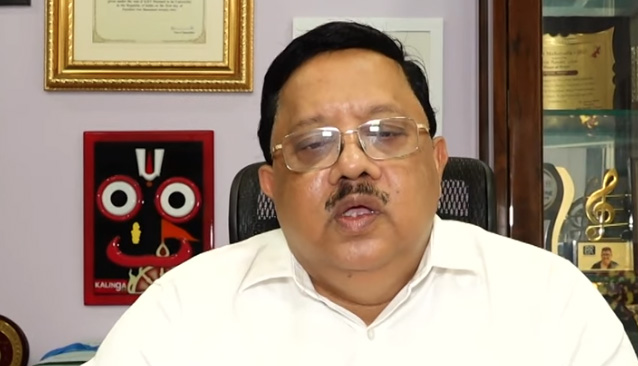
Bhubaneswar: Dr. Prabodh Mohanty, President of the Utkal Chamber of Commerce and Industry Limited (UCCIL), has lauded the NITI Aayog Decarbonisation Roadmap for the MSME sector, stating that it will be a cornerstone for achieving the goals of Viksit Odisha 2036.
Dr. Mohanty noted that the roadmap aligns perfectly with the state’s vision to become a 500 billion dollar economy by its centenary year in 2036. According to Dr. Mohanty, the NITI Roadmap’s focus on clean energy, energy efficiency, and alternative fuels will empower Odisha’s one million registered MSMEs to become globally competitive.
The President of the Utkal Chamber of Commerce and Industry Limited (UCCIL), has consistently advocated for the MSME sector as the primary engine for Odisha’s economic transformation. Commenting on the NITI Aayog Decarbonisation Roadmap, Dr. Mohanty stated that his long-standing focus on MSME growth is now finding a strategic alignment with the state’s goal of Viksit Odisha 2036.
Dr.Mohanty emphasized that for Odisha to transition into a developed state, its manufacturing sector must shift toward sustainable and climate-positive practices. The roadmap’s decarbonisation matrix provides a technical and financial blueprint that is essential for local units to navigate international green regulations.
The UCCIL President highlighted that the proposed viability gap funding and capital subsidies for green technology will reduce the financial burden on small-scale industries in industrial clusters like Kalinga Nagar, Angul, and Jharsuguda. He pointed out that integrating these units into the green energy value chain is critical for the Purvoday Mission and the broader Viksit Bharat 2047 agenda.
UCCIL Chief, Dr. Mohanty concluded that the successful implementation of this roadmap, supported by institutional frameworks like the National Project Management Agency, will drive job creation and ensure that Odisha emerges as a national hub for green manufacturing and clean energy by 2036.
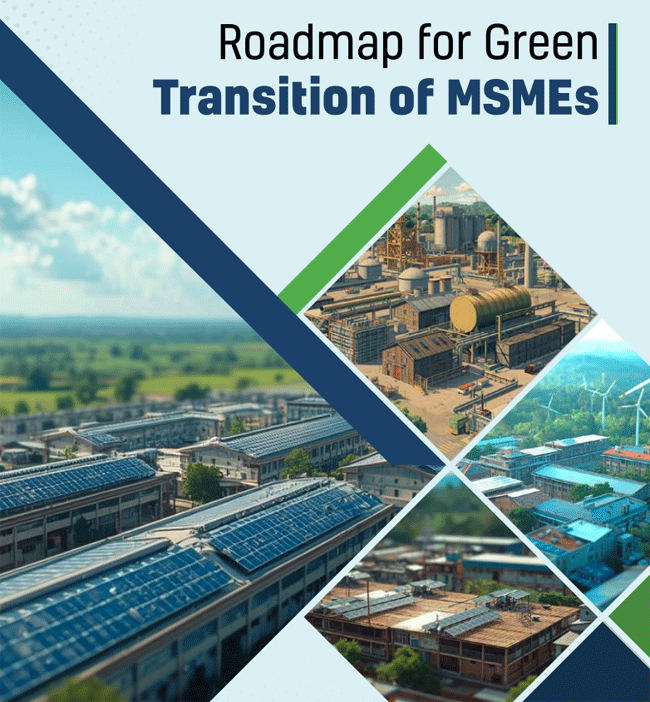
The NITI Aayog Decarbonisation Roadmap for the MSME sector, released on 21 January 2026, serves as a strategic blueprint to align India’s small-scale industries with the national goal of net-zero emissions by 2070 and the vision of Viksit Bharat 2047.
The crux of the roadmap lies in a three-pronged decarbonisation matrix focusing on the deployment of energy-efficient equipment to reduce specific energy consumption by 20%, the integration of green electricity for micro-units to phase out fossil-fuel reliance, and the adoption of alternative fuels like natural gas and bioenergy.
To ensure effective ground-level execution, the roadmap proposes a cluster-based implementation framework led by a newly established National Project Management Agency (NPMA) and supported by financial mechanisms such as viability gap funding (VGF) of up to 15% capital subsidy for green technology.
By addressing the 135 million tonnes of carbon emissions generated by the sector, this roadmap aims to reduce emission intensity by 55-62% over the next five years, ensuring that MSMEs remain globally competitive and ready to navigate international climate-related trade regulations.