

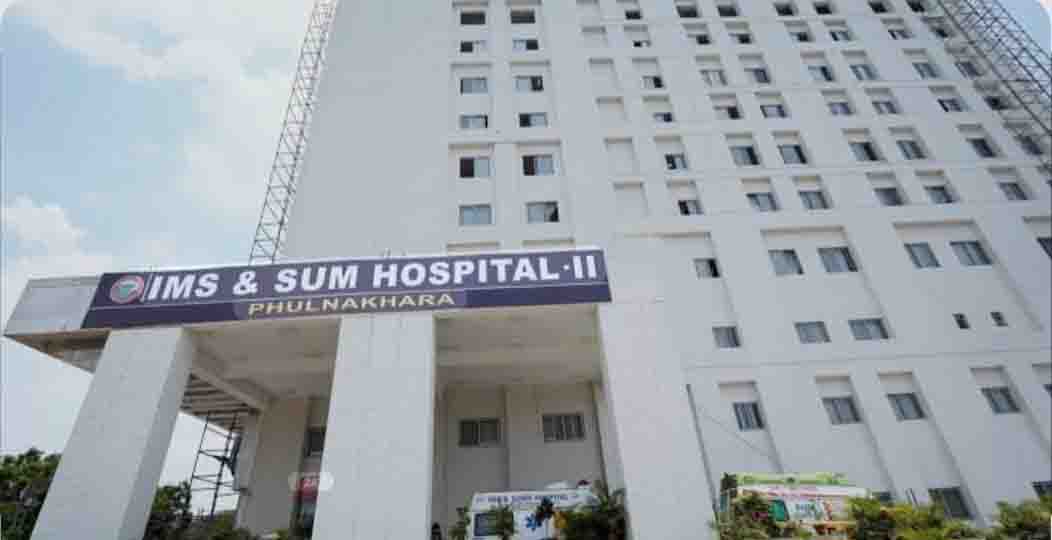
Bhubaneswar: The successful execution of eastern India’s first navigation-guided bronchoscopic cryobiopsy at IMS and SUM Hospital-2 represents a transformative shift in the diagnostic landscape of respiratory oncology. This procedural milestone, achieved by a specialized pulmonary team in Phulnakhara, bridges a critical gap in the systemic management of peripheral lung lesions, where traditional diagnostic pathways often encounter significant anatomical barriers. By synthesizing virtual navigation technology with the precision of cryobiopsy, clinicians have established a new socio-legal and medical standard for minimally invasive intervention, prioritizing patient safety while ensuring high-fidelity histopathological results.
The case involved a 57-year-old male from Digapahandi whose clinical presentation—persistent cough, chest pain, and shortness of breath—indicated a 3-cm speculated mass deep within the right upper lobe. Such peripheral locations historically necessitate invasive surgical biopsies, which carry inherent risks of morbidity and prolonged recovery. However, the deployment of virtual navigation bronchoscopy allowed the medical team to map a precise digital trajectory to the site of the malignancy. The subsequent application of cryobiopsy—using extreme cold to retrieve intact, high-quality tissue samples—circumvented the cellular crushing common in conventional needle biopsies, providing the pathology department with the structural integrity required for an immediate and definitive diagnosis.
This advancement is characterized by a moral urgency to address the escalating burden of lung cancer through early detection. The speed of the diagnostic cycle in this instance was remarkable; histopathological confirmation was achieved within 96 hours, facilitating a rapid transition to surgical oncology for curative resection. The causal link between early, precise diagnostics and long-term survival rates cannot be overstated. By localized disease identification before metastasis occurs, the medical team has moved beyond mere palliative care toward a trajectory of complete clinical cure.
Led by Dr. Swadesh Kumar Mohanty and supported by a multi-disciplinary team including Dr. Priyadarshini Parida, Dr. Rachita Mohanty, Dr. Surjya Sankar Meher, and Dr. Jagannath, alongside the anesthesiology expertise of Dr. Sudeep Mohapatra, the operation underscores a systemic evolution in regional healthcare infrastructure. This integration of technological precision and clinical expertise effectively democratizes access to cutting-edge interventional pulmonology in eastern India. As IMS and SUM Hospital-2 establishes itself as a center of excellence, the success of this procedure serves as a vital evidence-based narrative for the future of thoracic medicine, proving that technological synthesis is the primary driver of improved patient outcomes in the fight against cancer.