

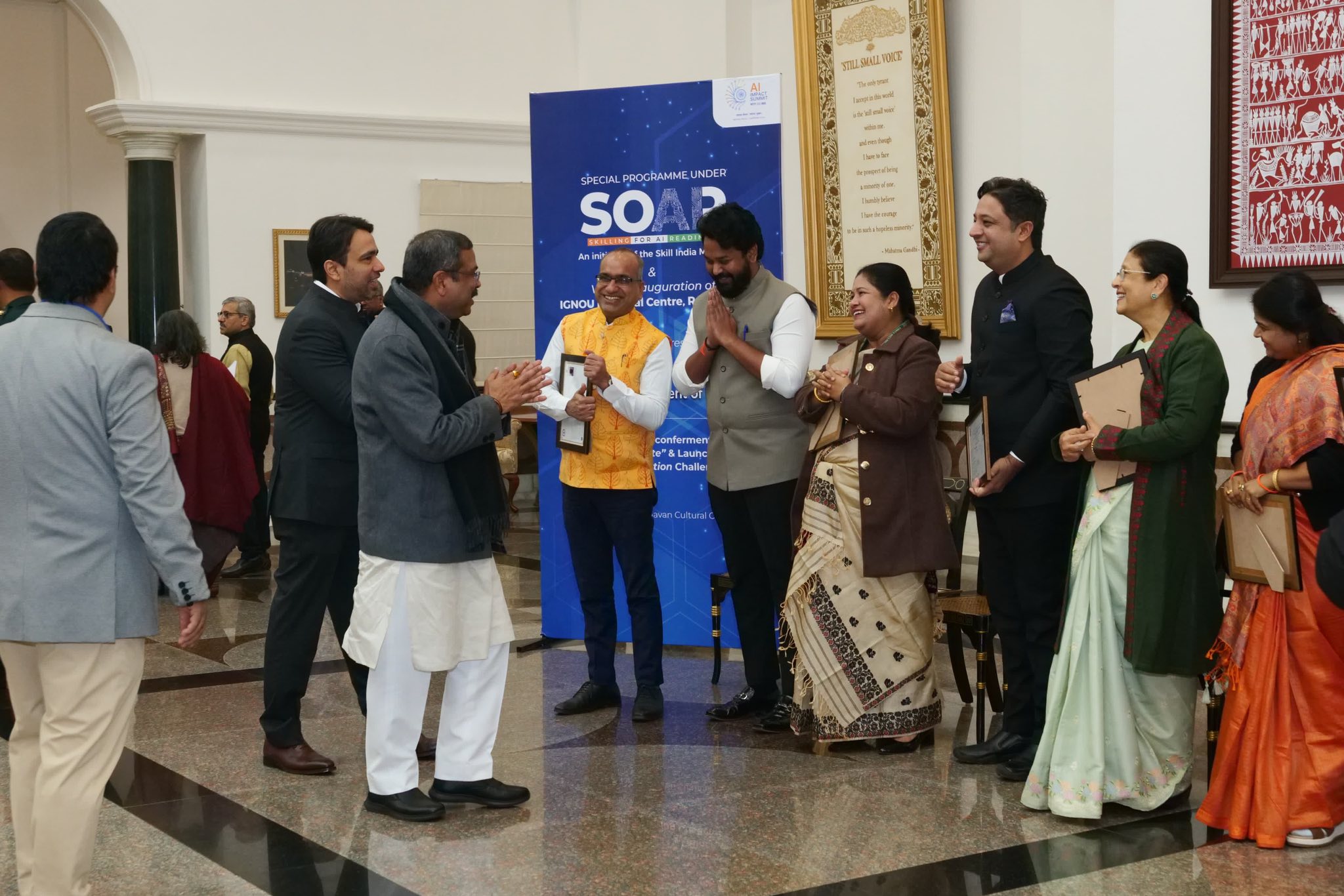
New Delhi: In a definitive move toward the democratization of frontier technology, the Presidential announcement of the ‘#SkillTheNation Challenge’ marks a critical inflection point in India’s socio-technical evolution. By urging a cross-sectoral mobilization of citizens, educators, and youth to engage with the SOAR (Skilling for AI Readiness) initiative, the Indian state is articulating a moral urgency to bridge the digital divide before it hardens into a permanent structural inequity.
The institutionalization of AI literacy reached a symbolic and functional milestone as 15 Members of Parliament, including Shri Sujeet Kumar, completed the SOAR AI course module. This legislative engagement signifies a top-down commitment to evidence-based governance, ensuring that the architects of India’s legal framework possess the technical fluency required to regulate and harness algorithmic systems. The participation of leadership within the highest democratic institution establishes a systemic precedent: AI readiness is no longer a niche technical requirement but a fundamental civic duty for those presiding over the nation’s future.
Launched in July 2025 under the Ministry of Skill Development and Entrepreneurship, the SOAR program addresses the layered causality of technological displacement by providing structured, micro-credentialed pathways via the Skill India Digital Hub (SIDH). In its first six months, the initiative has achieved a systemic reach of over 1.59 lakh learners, translating complex computational concepts into ethical and aspirational frameworks for school students and professionals alike.
This movement transcends mere vocational training; it is a socio-legal intervention designed to ensure that India’s journey toward a technologically empowered society remains inclusive. By embedding principles of responsibility and simplicity into the curriculum, the state is actively mitigating the risks of algorithmic bias and economic exclusion. As the nation pivots toward this AI-augmented era, the collective blessing of its leadership and the mass participation of its citizenry reflect a unified vision for a future where technology serves the common good under the watchful eyes of Lord Jagannatha.