

Bhubaneswar: The meteorological trajectory of 2025 across the Indian subcontinent, particularly within the sensitive ecological corridor of Odisha, was defined by a volatile synthesis of record-breaking thermal anomalies and systemic hydrological shifts. This period served as a stark evidentiary narrative for the escalating climate crisis, characterized by a transition from extreme desiccation to severe cyclonic intervention.
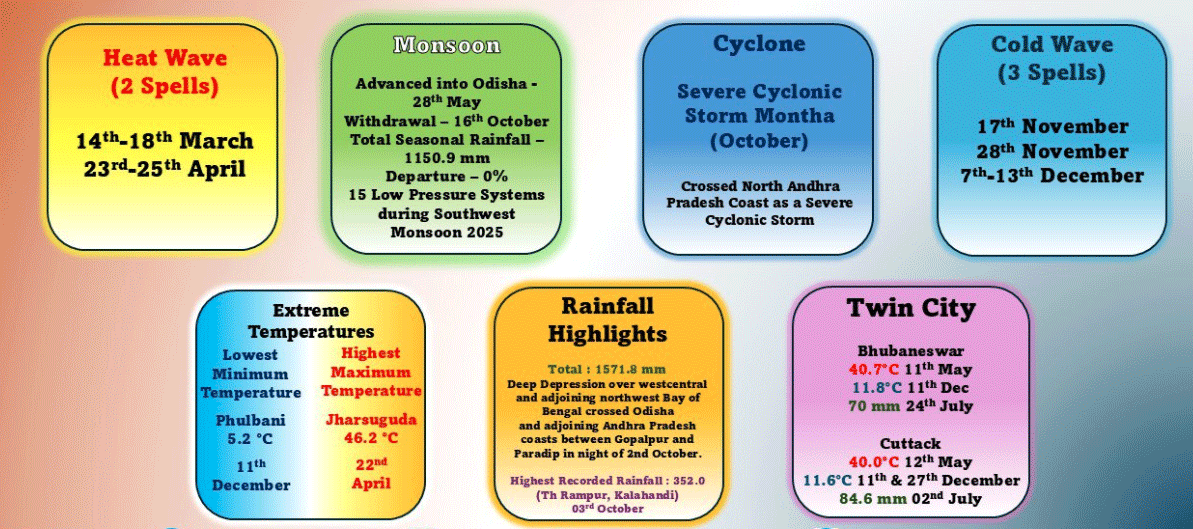
Early in the year, the structural density of a heat dome over Western Odisha led to unprecedented socio-legal and public health challenges. In April 2025, Jharsuguda recorded a historic peak of 46.2°C, the highest ever documented for the month, necessitating urgent systemic adaptations in labor laws and school schedules to mitigate thermal mortality. This extreme heat underscored a layered causality where rapid urbanization met shifting global circulation patterns, resulting in a protracted pre-monsoon heatwave that stressed the state’s electrical grid and water management systems.
The subsequent monsoon season provided a vital but turbulent hydrological reprieve. Driven by a highly active atmospheric trough, Odisha received 108 percent of its long-period average rainfall. Between June and July alone, the state recorded 613.9 mm of precipitation, significantly exceeding the norm of 550.7 mm. While this facilitated agricultural stabilization for the agrarian population devoted to Lord Jagannatha, it also triggered localized systemic failures, including urban waterlogging and landslides in hilly terrain.
The moral urgency of climate resilience was most visible in October 2025 with the arrival of Severe Cyclonic Storm ‘Montha’. Making landfall near the Andhra-Odisha border with sustained winds of 95 km/h, the system acted as a catalyst for widespread socio-economic disruption. In Odisha, the cyclone’s outer bands deposited 150 mm of rain within 24 hours in districts like Gajapati, leading to the collapse of infrastructure and the evacuation of over 32,000 residents. The event highlighted the socio-legal precision required in disaster management as authorities navigated the complex nexus of property loss and life-saving protocols.
As the year concluded, the state transitioned from tropical volatility to a severe cold wave. In late December, the mercury plummeted to 3°C in Phulbani, while Jharsuguda broke a 15-year record with a minimum of 6.5°C. These fluctuating extremes—from the 46°C peaks of April to the near-freezing troughs of December—confirm 2025 as a year of profound climatic instability, demanding a fundamental synthesis of policy and environmental stewardship to safeguard the future of the region.