

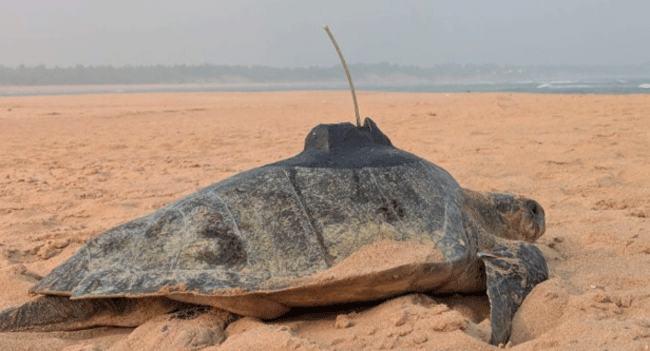
Bhubaneswar: In a significant move for marine conservation, the Department of Forest has reinitiated its satellite telemetry program to track the migratory paths and behavioral patterns of Olive Ridley sea turtles.
Following the arrival of these endangered marine guests at the Rushikulya river mouth in Ganjam district, forest officials and a team of experts from the Wildlife Institute of India have successfully fitted GPS-tagged satellite transmitters on several turtles.
This latest tagging initiative is unique because it is being conducted during the mating phase rather than the traditional nesting period. On December 27, 2025, a male and a female turtle were tagged near Podampeta and released back into the sea.
Scientists believe that tracking both genders during this stage will provide a more comprehensive understanding of their movements in open waters before the mass nesting, or arribada, begins.
The high-tech transmitters, imported from New Zealand, are expected to provide real-time data for the next year, helping researchers pinpoint the turtles’ places of origin and their transition between different marine environments.
The Rushikulya rookery recently saw a record-breaking nesting season earlier in 2025, with nearly 7 lakh turtles laying eggs along the shore. To protect the current mating population, the state has intensified sea patrolling and strictly enforced a seven-month fishing ban within 20 kilometers of the coast.
These conservation efforts aim to minimize threats from fishing bycatch and coastal development, ensuring that the Odisha coastline remains one of the world’s most vital sanctuaries for these vulnerable marine creatures.