

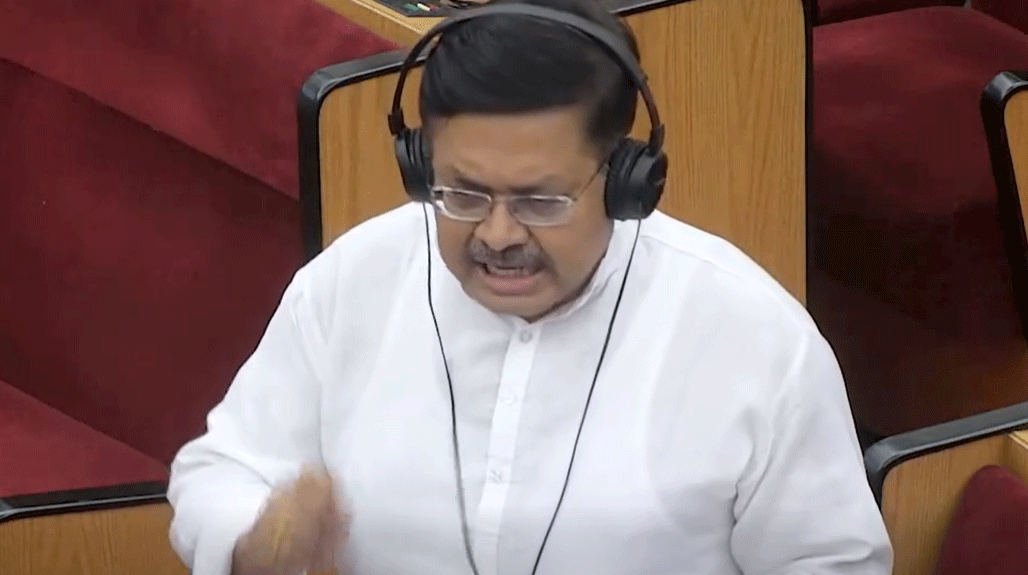
Bhubaneswar: Odisha Government has introduced a landmark change to its alcohol regulation framework by announcing a three-year Excise Policy, moving away from the traditional practice of annual renewals.
This new policy, as detailed by Excise Minister Shri Prithiviraj Harichandan in the Odisha Legislative Assembly, is set to be applicable from 1 April 2026 and will remain in effect until 31 March 2029.
The most significant and unique highlight of this announcement is the introduction of a 0.5% de-addiction cess on excise duty, which marks the first time the state has specifically earmarked revenue for the establishment and operation of de-addiction centers across Odisha.
The policy introduces several technological and structural reforms aimed at transparency and enforcement. A comprehensive Track and Trace system will be implemented to monitor the movement of every bottle from the point of manufacture to the retail counter.
To further curb illegal activities, all liquor manufacturing units and retail shops will be required to operate under 24-hour CCTV surveillance, with live feeds accessible by the Excise Commissioner’s office and district administrations.
Additionally, the government has transitioned from the Minimum Guaranteed Quantity (MGQ) system to a Minimum Guaranteed Excise Revenue (MGER) model, a move intended to stabilize state revenue while reducing the pressure on shop owners to push high-volume sales.
In a move that has sparked significant discussion, the State Government has approved the sale of liquor in tetra packs as an alternative to traditional glass bottles. This change is being promoted as a sustainable, eco-friendly measure to reduce environmental hazards caused by broken glass.
Alongside these environmental efforts, the policy imposes strict geographical restrictions: no new liquor shops will be opened across the state, and no outlets will be permitted near religious sites, specifically mentioning the Shree Jagannatha Temple and the Badadanda in Puri. Furthermore, the ban on home delivery of liquor continues to remain in force.
And new ON shops are banned in rural areas, with exceptions only for three-star and above hotels or clubs.
The new regulations also emphasize quality control and infrastructure. All Out-Still (OS) units must now achieve FSSAI certification and comply with pollution control norms, signaling a shift toward modernizing country liquor production.
Financial adjustments have also been confirmed, including a 20% increase in license application fees and a scheduled annual hike of 10% to 15% in license fees.
To support these enforcement goals, the state’s excise laboratories will be upgraded with advanced testing technology, and the department is working toward converting its enforcement staff into an armed force to more effectively tackle the illegal narcotics and liquor trade.